
Why High-Net-Worth Buyers Are Choosing Dallas Over Miami and L.A. Right Now
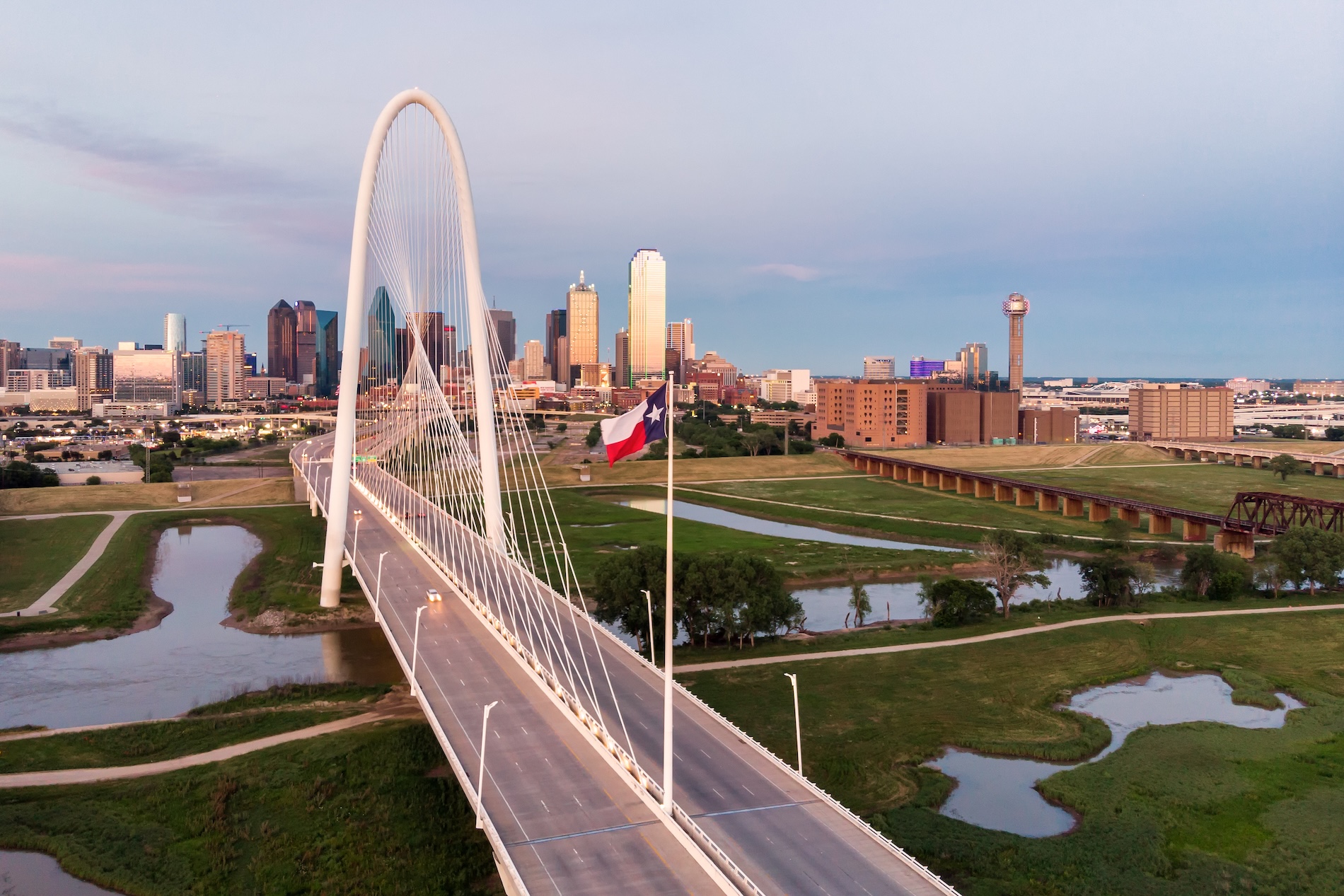
Dallas isn’t winning high-net-worth buyers on weather or nostalgia. It’s winning on a stack of measurable advantages — workforce, corporate density, population growth, and a cultural core that now outranks its coastal rivals by name. For buyers comparing Dallas against Miami and Los Angeles, the case increasingly comes down to which city’s numbers actually hold up.
A City Racking Up the Rankings That Matter
Dallas leads the nation in corporate relocations and quality-of-life fundamentals, backed by a stack of outside validation rather than civic boosterism. CNBC has rated Texas the No. 1 workforce in America, and Chief Executive magazine’s 2026 CEO survey named Texas the best state for business for the 22nd consecutive year — a run no other state has come close to matching. On the migration side, the U-Haul Growth Index named Dallas-Fort Worth America’s No. 1 growth metro for 2025, the second year running, while California has ranked dead last among all 50 states on that same index for six consecutive years. For buyers weighing Dallas against Los Angeles specifically, that isn’t a marginal data point — it’s a direct, sustained reversal of where the country is moving.
The Corporate Anchors Miami Is Still Building Toward
Dallas is home to Fortune 500 leaders like AT&T, CBRE, and Texas Instruments, alongside major institutional expansions like Goldman Sachs’ 5,000-employee campus — the kind of corporate density that takes decades to build, not a single boom cycle. That density shows up in the relocation data, too: CBRE’s 2026 headquarters relocation report found Dallas-Fort Worth landed 11 interstate or international corporate headquarters in 2025 — more than any other U.S. metro, and ahead of Miami’s 8. Since 2018, DFW has captured more than 100 headquarters relocations, the most of any metro area in the country over that span. For a buyer weighing where the next decade of jobs, capital, and cultural investment will concentrate, that track record carries more weight than a single hot season of Miami headlines.
A Region Still Growing at a Pace Coastal Markets Can’t Match
The scale of Dallas-Fort Worth’s growth is easy to understate until the numbers are in front of you. DFW is now the most populous region in Texas, with more than 8.4 million residents, and it added roughly 123,557 new residents between 2024 and 2025 alone — a pace of about 339 new arrivals every day. Projections put the region at 11.4 million residents by 2045. Connectivity has kept pace with population: DFW International Airport is the fourth-busiest airport in the world, handling 85.6 million passengers in 2025, and is home to American Airlines, the largest global airline, alongside Southwest, one of the country’s largest domestic carriers. Downtown Dallas alone employs more than 150,000 people. It’s the kind of infrastructure that lets a resident fly nonstop to nearly anywhere and still be home for dinner — a practical advantage Miami and Los Angeles, for all their glamour, don’t offer at the same scale.
America’s #1 Arts District, Two Years Running
The cultural case is where Dallas separates itself most clearly from Miami and L.A. The Dallas Arts District spans 118 acres and is the largest contiguous urban arts district in the country, drawing more than 3 million visitors and 500,000 students annually. It holds more buildings designed by Pritzker Prize-winning architects than any other location in the world, and in 2025, USA Today readers named it the best arts district in America for the second consecutive year — a distinction neither Miami’s Design District nor Los Angeles’s more geographically scattered cultural map has claimed. Downtown Dallas posts a 94 walk score, with more than 100 live music venues and 40 parks and plazas within reach. For relocating buyers who measure a city by more than its tax code, that concentration of culture, walkability, and civic investment is doing quiet, cumulative work on the decision.
Where That Puts HALL Arts Residences
At 1747 Leonard Street, that HALL Arts Residences sits — a 28-story tower built for buyers making exactly this calculation. The building holds dual LEED Gold and WELL Gold certification, a first for a multifamily high-rise in Texas, with interiors by Emily Summers and kitchens outfitted in Bulthaup, Gaggenau, and Dornbracht. Remaining inventory includes the Masterpiece Collection on floors 20 through 25 and three penthouses — Gallery, Canvas, and Sky Terrace — for buyers who want the Arts District address without compromising on the finishes they’d expect on either coast. Schedule a private tour here.